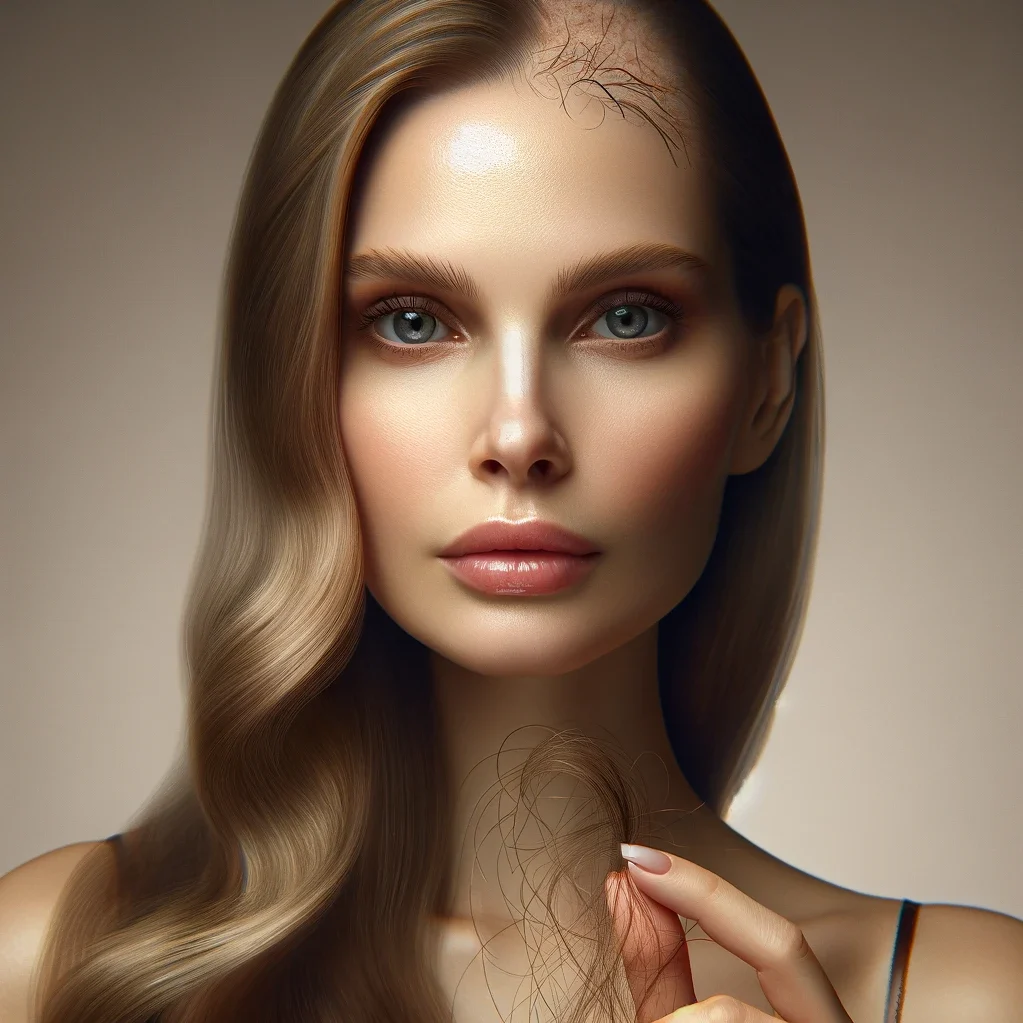
At some point in a woman’s life, she may experience the hormonal changes associated with menopause. Along with these changes, hair loss can become a concern for many women. Menopause-related hair loss is a common issue that can be distressing and impact self-esteem. Understanding the causes and finding effective solutions can help women manage hair thinning and promote healthy hair growth during this time.
During menopause, the decrease in estrogen and progesterone levels can affect hair growth, resulting in overall hair thinning. Additionally, hormonal changes can lead to female-pattern hair loss, which presents as hair thinning at the top of the scalp and widening through the center. These changes can be frustrating, but there are solutions available to address menopause-related hair loss.
Key Takeaways:
- Menopause can lead to hormonal changes that impact hair growth.
- Female-pattern hair loss is common during menopause.
- Understanding the causes of menopause-related hair loss is essential for finding effective solutions.
- Managing hair loss during menopause involves adjusting hair care routines and seeking appropriate treatment options.
- Consulting with a healthcare professional or dermatologist can help create a tailored approach to managing menopause hair loss.
Causes and Symptoms of Menopause Hair Loss
Menopause, a natural stage in a woman’s life, brings about various physical and emotional changes. One common concern that many women experience during this time is hair loss. Understanding the causes and symptoms of menopause-related hair loss can help women cope with this transition and find effective solutions.
The primary cause of hair loss during menopause is hormonal changes. As women age, their estrogen and progesterone levels decrease, leading to an imbalance in their hormonal system. These hormonal fluctuations can negatively affect hair growth cycles, resulting in overall hair thinning.
Menopause-related hair loss typically presents as progressive hair thinning, especially at the top of the scalp and widening through the center. Women may notice a decrease in hair volume, increased shedding, and a more visible scalp. While it can be distressing, it’s important to remember that this is a natural occurrence and not a serious medical condition.
The hormonal hair loss in menopause can be better understood by looking at the hair growth cycle. Hair follicles go through a growth phase (anagen), a transitional phase (catagen), and a resting phase (telogen) where hair falls out naturally. Hormonal imbalances during menopause can disrupt this cycle, leading to shorter growth phases and longer resting phases. This results in fewer hair follicles actively producing hair and an increased rate of shedding.
It’s essential to address menopause-related hair loss with the right knowledge and solutions. While the condition itself cannot be cured, several remedies and management techniques are available to mitigate the effects and maintain healthy hair. In the next section, we will explore tips for managing menopause hair loss to help women regain confidence and restore hair health.
Tips for Managing Menopause Hair Loss
Menopause hair loss can be a challenging issue, but there are remedies and strategies available to help you treat and manage this condition. By making small adjustments to your hair care routine, you can minimize further damage and promote healthier hair growth.
One important step in treating menopause hair loss is to limit the use of heat styling tools. Excessive heat can weaken the hair follicles and lead to increased hair loss. Instead, embrace your natural hair texture or opt for heat-free styling alternatives. This will help prevent further hair thinning and breakage.
In addition, using nourishing conditioners can provide essential moisture to your hair and scalp, promoting overall hair health. Look for conditioners specifically formulated for thin or damaged hair, as they often contain beneficial ingredients such as biotin, keratin, and vitamins. Regular conditioning can help strengthen the hair and reduce breakage.
Avoiding harsh hair treatments, such as chemical relaxers or excessive hair coloring, is also crucial in managing menopause hair loss. These treatments can cause further damage to already fragile hair, making it more prone to breakage and thinning. Opt for gentler alternatives or consult with a professional stylist for hair care options that are suitable for your specific needs.
FAQ
What causes hair loss during menopause?
Hair loss during menopause is primarily attributed to hormonal changes. Decreased estrogen and progesterone levels affect hair growth and result in overall hair thinning.
Is menopause-related hair loss permanent?
Menopause-related hair loss is usually temporary and can be managed with the right strategies and treatments.
How can I prevent further hair loss during menopause?
Adjusting your hair care routine can help prevent further hair loss. This includes limiting the use of heat styling tools, using nourishing conditioners, and avoiding harsh treatments that can damage the hair.
Are there any remedies to treat menopause-related hair loss?
There are several remedies available to treat menopause-related hair loss, including topical treatments, medications, and hair growth supplements. It is wise to consult with a healthcare professional to determine the most suitable option for your specific situation.
Can menopause cause hair thinning at the top of the scalp?
Yes, menopause can cause hair thinning at the top of the scalp. This condition, known as female-pattern hair loss, is common during menopause and may result in widening through the center of the scalp.
Can hormone replacement therapy help with menopause-related hair loss?
Hormone replacement therapy (HRT) may help improve hair loss symptoms in menopausal women. However, the decision to pursue HRT should be made in consultation with a healthcare professional, as it carries potential risks and side effects.
Are there any natural remedies to manage menopause-related hair loss?
Some natural remedies that may help manage menopause-related hair loss include consuming a balanced diet rich in vitamins and minerals, practicing stress-reducing techniques, and using hair care products with natural ingredients that promote hair growth.
How long does menopause-related hair loss typically last?
The duration of menopause-related hair loss can vary from person to person. It is usually temporary and may last for several months to a few years. Seeking professional advice can help determine the best course of action for your specific situation.
Can menopause-related hair loss be reversed?
In many cases, menopause-related hair loss can be managed and reversed with proper treatment and care. However, it is important to consult with a healthcare professional to determine the underlying cause and create an appropriate treatment plan.
Are there any specific hairstyles that can help disguise menopause-related hair loss?
Certain hairstyles, such as layered cuts, shorter lengths, and textured styles, can help disguise menopause-related hair loss by adding volume and creating the illusion of thicker hair. Consulting with a professional hairstylist can provide personalized recommendations based on your hair type and concerns.