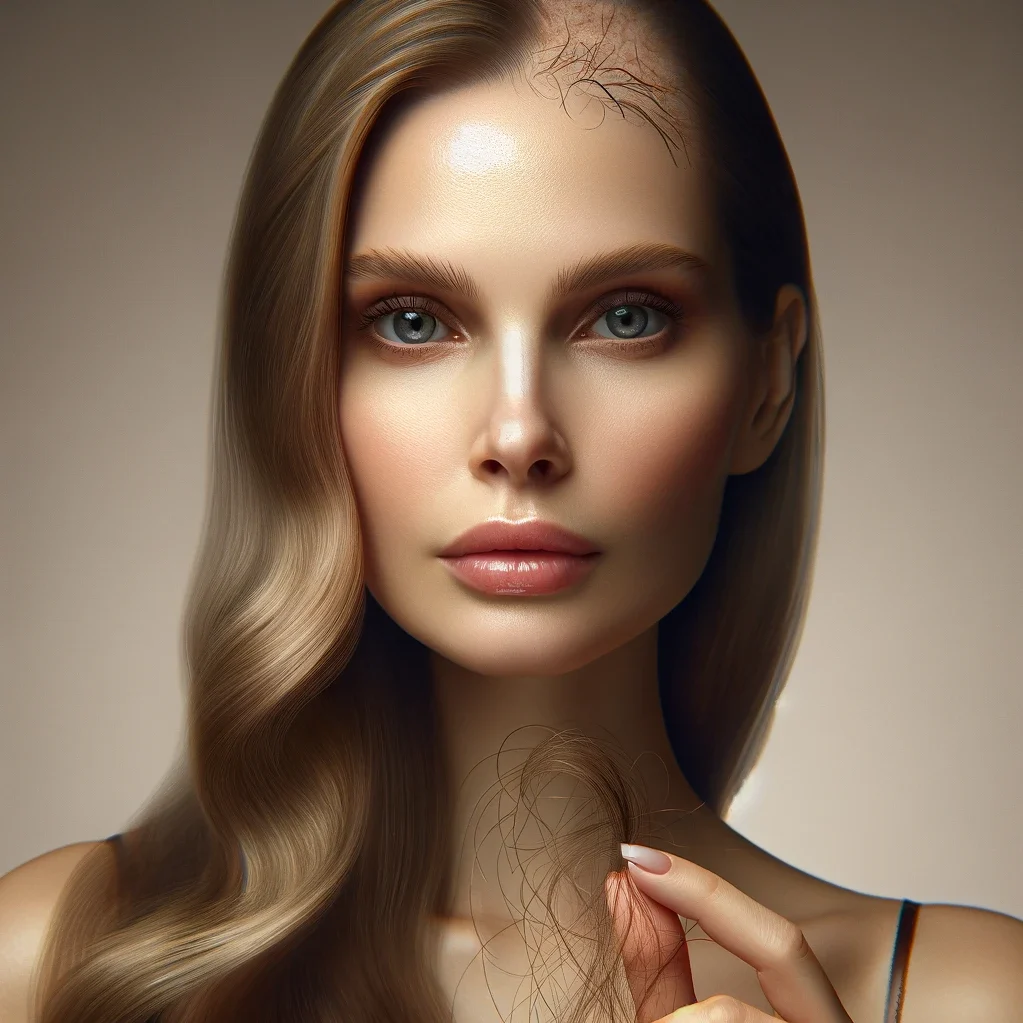
Menopause is a natural transition in a woman’s life that can bring about various changes in her body, including hair loss. During this period, the levels of hormones like estrogen and progesterone decrease, leading to slower hair growth and thinner strands. Female-pattern hair loss, or androgenetic alopecia, is the most common type of hair loss experienced by women during menopause. It typically involves hair thinning at the top of the scalp and widening of the part. While hair loss during menopause is not usually permanent or severe, it can still cause distress and affect self-confidence. Fortunately, there are several treatments and tips that can help combat menopause-related hair loss.
Key Takeaways:
- Menopause can lead to hair loss due to hormonal changes.
- Female-pattern hair loss is common during menopause.
- There are various treatments for menopause-related hair loss, including minoxidil, hormone replacement therapy, and light therapy.
- Lifestyle changes, such as reducing stress and maintaining a healthy diet, can also help manage hair loss during menopause.
- Consulting with a healthcare professional is important to determine the best treatment option.
Best Menopause Hair Loss Treatments
When it comes to treating menopause-related hair loss, there are various options available. One effective treatment is minoxidil, which is an FDA-approved topical medication that promotes hair growth. Minoxidil comes in different strengths and needs to be used consistently for about a year to determine its effectiveness.
Androgen blockers like finasteride can also be prescribed to women experiencing hair loss due to hormonal imbalances. Hormone replacement therapy (HRT) is another option that may help improve hair growth, as estrogen is responsible for hydrating cells, including those in the hair. Light therapy and platelet-rich plasma therapy are emerging treatments that show promise in improving hair density and thickness.
In some cases, hair transplants may be considered for women with significant hair loss. It is important to consult with a healthcare professional to determine the best treatment option based on individual needs and medical history.
| Treatment | How it Works |
|---|---|
| Minoxidil | Promotes hair growth |
| Finasteride | Blocks androgen hormones |
| Hormone Replacement Therapy (HRT) | Improves hair growth by hydrating cells |
| Light Therapy | Improves hair density and thickness |
| Platelet-Rich Plasma Therapy | Enhances hair growth |
| Hair Transplants | Restores hair in areas of significant loss |
Tips for Managing Menopause Hair Loss
In addition to medical treatments, there are several lifestyle and home remedies that can help prevent and manage menopause-related hair loss. One important step is to reduce stress levels through practices like yoga and exercise. Stress can contribute to hormonal imbalances that can further exacerbate hair loss. Regular physical activity not only helps manage stress but also promotes overall health and hormonal balance, which can support healthy hair growth.
Maintaining a balanced diet is crucial for optimal hair health during menopause. Including nutrient-rich foods like whole grains, fruits, and vegetables in your daily meals can provide essential vitamins and minerals that support hair growth and prevent further thinning. Additionally, foods rich in essential fatty acids, such as salmon and walnuts, can help nourish the hair follicles and maintain their health.
Hydration plays a significant role in hair health. It is essential to drink an adequate amount of water daily to keep the hair and scalp hydrated. Proper hydration supports hair growth and minimizes the risk of dry, brittle hair. It is also important to protect your hair from external damaging factors such as excessive heat styling, sun exposure, and wind damage. Utilizing natural hair products and avoiding harsh chemicals can help prevent further hair loss and maintain the overall health of your hair.
If you are experiencing medication-related hair loss, it is crucial to consult with a healthcare professional. They can provide guidance and suggest alternative medications or treatments without hair loss side effects. Working with a healthcare professional ensures personalized solutions in managing menopause-related hair loss.
By implementing these tips and adopting a comprehensive approach to hair care, you can effectively manage menopause-related hair loss and promote healthy hair growth.
FAQ
Can menopause cause hair loss?
Yes, menopause can cause hair loss. The decrease in estrogen and progesterone levels during menopause can lead to slower hair growth and thinner strands.
What is female-pattern hair loss during menopause?
Female-pattern hair loss, also known as androgenetic alopecia, is the most common type of hair loss experienced by women during menopause. It typically involves hair thinning at the top of the scalp and widening of the part.
What are some treatments for menopause-related hair loss?
There are several treatment options for menopause-related hair loss, including minoxidil, finasteride, hormone replacement therapy (HRT), light therapy, platelet-rich plasma therapy, and hair transplants.
How does minoxidil help with menopause hair loss?
Minoxidil is an FDA-approved topical medication that promotes hair growth. It needs to be used consistently for about a year to determine its effectiveness in stimulating hair regrowth.
Can hormone replacement therapy help with menopause-related hair loss?
Hormone replacement therapy (HRT) may help improve hair growth as estrogen plays a role in hydrating cells, including those in the hair. However, it is important to discuss the potential risks and benefits of HRT with a healthcare professional.
Are there any natural remedies for menopause hair loss?
Yes, there are several natural remedies that can help manage menopause-related hair loss. These include reducing stress levels, maintaining a healthy diet rich in nutrients, staying hydrated, avoiding excessive heat styling, and using natural hair products.
How can I prevent menopause-related hair loss?
To prevent menopause-related hair loss, it is important to maintain a healthy lifestyle, manage stress levels, eat a balanced diet, and protect the hair from damage by avoiding excessive heat styling and sun exposure.
Are there any supplements that can help with menopause hair loss?
There are various supplements available that claim to promote hair growth and manage menopause-related hair loss. However, it is important to consult with a healthcare professional before starting any new supplements to ensure their safety and effectiveness.
When should I consult a healthcare professional about menopause-related hair loss?
If you are experiencing significant hair loss or if your hair loss is causing distress and affecting your self-confidence, it is recommended to consult a healthcare professional. They can assess your individual situation and recommend the most appropriate treatment options.