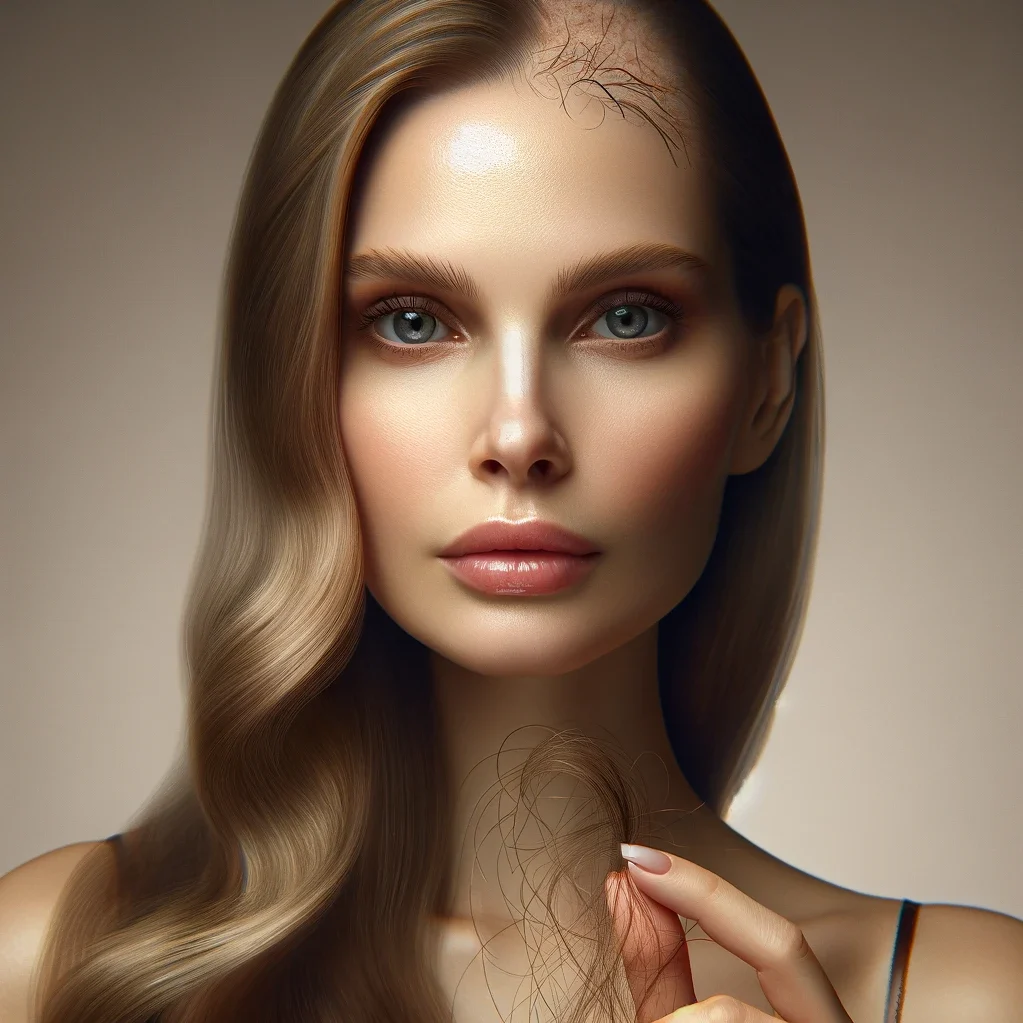

Thinning hair during menopause is a common concern for many women. Female-pattern hair loss, which can be inherited and often starts with hair thinning at the top of the scalp, tends to become more noticeable in your 40s, 50s, or 60s – right around the time most women experience menopause. This is because estrogen, which helps keep hair healthy and full, decreases significantly during menopause. However, there are solutions and treatments available to manage and improve thinning hair during this time. It’s important to explore these options to regain confidence and promote healthier hair growth.
Key Takeaways:
- Thinning hair is a common concern for women during menopause.
- Female-pattern hair loss tends to become more noticeable around menopause.
- Estrogen levels decrease during menopause, affecting hair health.
- There are solutions and treatments available to manage thinning hair.
- Consult with a healthcare professional to determine the best approach for your specific situation.
Best Menopause Hair Loss Treatments
When it comes to treating hair loss during menopause, there are several options to consider. One of the most commonly used treatments is minoxidil, also known as Rogaine. Minoxidil is a topical medication that is FDA-approved to treat female-pattern baldness. It comes in different strengths and needs to be used consistently for about a year to see results.
Another option is using androgen blockers like finasteride, which can help counteract the effects of increased androgens during menopause.
Hormone replacement therapy (HRT) is another possible treatment, although it is typically not recommended solely for addressing hair loss.
Light therapy and platelet-rich plasma therapy are emerging treatments that show promise in improving hair density and promoting regrowth.
“Hair transplants” are a surgical option for women with enough donor hair.
It’s important to consult with a healthcare professional to determine the best treatment approach for your specific situation.
Camouflaging Menopause Hair Loss
If you prefer not to pursue treatment options for thinning hair during menopause, there are techniques and remedies that can help camouflage the appearance of hair loss.
Getting the right haircut, such as shorter layered styles, can add volume and make hair appear fuller. Keeping your hair colored can also help make it look thicker, as dyeing the hair deposits color onto individual strands.
Volumizing products like hair fibers can be used to conceal sparse spots, and extensions or hairpieces can add volume and cover areas with thinning hair. Ultimately, the decision to pursue treatment or opt for camouflaging techniques is a personal one.
It’s important to choose the approach that works best for you and helps you feel confident about your hair during menopause.
FAQ
Is hair thinning during menopause common?
Yes, hair thinning during menopause is a common concern for many women. Female-pattern hair loss, which often starts with hair thinning at the top of the scalp, tends to become more noticeable in your 40s, 50s, or 60s – right around the time most women experience menopause.
Why does hair thinning occur during menopause?
Hair thinning during menopause occurs because estrogen, which helps keep hair healthy and full, decreases significantly during this time.
What are the treatment options for hair loss during menopause?
Treatment options for hair loss during menopause include minoxidil (Rogaine), which is a topical medication approved by the FDA for female-pattern baldness. Androgen blockers like finasteride can also be used to counteract the effects of increased androgens during menopause. Hormone replacement therapy (HRT), light therapy, platelet-rich plasma therapy, and hair transplants are other possible treatments.
How long does it typically take to see results from minoxidil?
Minoxidil needs to be used consistently for about a year to see results.
Can haircut and hair color help with thinning hair during menopause?
Yes, getting the right haircut, such as shorter layered styles, can add volume and make hair appear fuller. Keeping your hair colored can also help make it look thicker as dyeing the hair deposits color onto individual strands.
Are there products that can be used to conceal thinning hair?
Yes, volumizing products like hair fibers can be used to conceal sparse spots, and extensions or hairpieces can add volume and cover areas with thinning hair.
Should I pursue treatment or opt for camouflaging techniques?
The decision to pursue treatment or opt for camouflaging techniques is a personal one. It’s important to choose the approach that works best for you and helps you feel confident about your hair during menopause.