Thyroid disorders are known to cause hair loss. Whether it’s hypothyroidism or hyperthyroidism, these conditions can lead to hair thinning and loss. Unlike other types of hair loss that affect specific areas, thyroid-related hair loss is diffuse and affects the entire scalp. In severe cases, the hair loss can become noticeable, causing distress and affecting self-esteem.
However, the good news is that with proper treatment and management of the underlying thyroid disorder, regrowth of hair is possible. By understanding the impact of thyroid hormones on the hair growth cycle and recognizing the connection between autoimmune thyroid disease and hair loss, we can take the necessary steps to address and reverse the effects of thyroid-related hair loss.
Key Takeaways:
- Thyroid disorders such as hypothyroidism and hyperthyroidism can cause hair loss.
- Thyroid-related hair loss is diffuse and affects the entire scalp.
- Proper treatment and management of the thyroid disorder can lead to hair regrowth.
- Autoimmune thyroid disease, such as Hashimoto’s disease, is associated with an increased risk of alopecia areata.
- Understanding the phases of the hair growth cycle is crucial in addressing hair loss due to thyroid disorders.
The Hair Growth Cycle and Thyroid Disorders
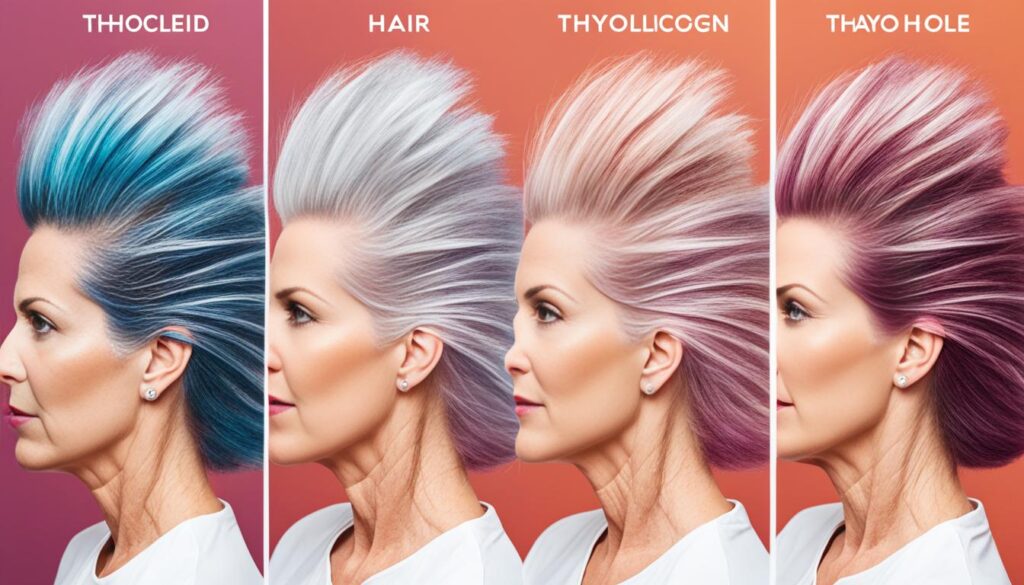
The hair growth cycle consists of three phases: anagen, catagen, and telogen. These phases play a vital role in the production and shedding of hair. Understanding the hair growth cycle is essential in addressing the impact of thyroid disorders on hair loss.
Anagen Phase:
The anagen phase is the active growth phase of the hair follicles. During this phase, the hair cells divide rapidly, and new hair is produced. The duration of the anagen phase varies for each individual, typically lasting between two to seven years. Hair growth rate and the length of the hair depend on the duration of this phase.
Catagen Phase:
The catagen phase is a short transitional phase that follows the anagen phase. It signals the end of active hair growth and the beginning of the hair follicles’ regression. The duration of this phase is relatively brief, usually lasting for a few weeks.
Telogen Phase:
The telogen phase is the resting phase of the hair growth cycle. During this phase, the hair follicles are not actively producing new hair. Instead, the existing hair remains attached to the scalp but is preparing to shed. The duration of the telogen phase is approximately two to four months.
Thyroid hormones play a crucial role in regulating the hair growth cycle. Imbalances in these hormones can disrupt the cycle and result in hair loss. Let’s explore the impact of different thyroid disorders on the hair growth cycle:
Hypothyroidism: In individuals with hypothyroidism, the anagen phase is often shortened, while the telogen phase is prolonged. As a result, there is a decrease in the production of new hair, leading to thinning and hair loss. The slowed metabolism associated with hypothyroidism can also affect hair growth.
Hyperthyroidism: Excess levels of thyroid hormones in individuals with hyperthyroidism can cause the opposite effect. The anagen phase may be extended, while the telogen phase is shortened. This can result in excessive shedding and thinning hair.
It is essential to recognize the impact of thyroid disorders on the hair growth cycle to effectively address and manage hair loss associated with these conditions.
| Thyroid Disorder | Effect on Hair Growth Cycle |
|---|---|
| Hypothyroidism | Shortened anagen phase, prolonged telogen phase, decreased production of new hair |
| Hyperthyroidism | Extended anagen phase, shortened telogen phase, excessive shedding |
Alopecia Areata and Thyroid Disorders
Alopecia areata is an autoimmune condition characterized by the development of bald patches on the scalp or other areas of the body. It is often associated with autoimmune thyroid disease, such as Hashimoto’s disease.
The immune system attacks the hair follicles, leading to hair loss. In individuals with autoimmune thyroid disease, the risk of developing alopecia areata is higher.
It is not uncommon for individuals with autoimmune thyroid disease to experience hair loss not only on the scalp but also in the eyebrows. The loss of hair in the outer edges of the eyebrows is a unique symptom of hypothyroidism.
Understanding the relationship between autoimmune thyroid disease and alopecia areata can help in diagnosing and managing hair loss associated with these conditions.
Diagnosis and Treatment of Thyroid-Related Hair Loss
To effectively address thyroid-related hair loss, a thorough diagnosis is essential. We need to evaluate thyroid function and rule out other potential causes of hair loss. Healthcare providers may perform blood tests to assess thyroid hormone levels and also check for any underlying autoimmune conditions that could be contributing to the hair loss.
Hormone imbalances, nutritional deficiencies, and medication side effects can also play a role in hair loss and should be considered during the diagnosis. By identifying and addressing these factors, we can optimize the treatment plan and increase the chances of successful hair regrowth.
The primary treatment for thyroid-related hair loss is proper management of the underlying thyroid disorder. This often involves adjusting thyroid medication to achieve optimal hormone levels. In some cases, additional treatments such as minoxidil (Rogaine) or finasteride (Propecia) may be recommended to promote hair growth.
It’s important to note that the regrowth of hair may take several months, and the new hair may have different characteristics. Patience and consistency with treatment are key. Working closely with healthcare providers to diagnose the underlying cause of hair loss and develop an appropriate treatment plan is crucial in effectively addressing thyroid-related hair loss.
Treatment Options for Thyroid-Related Hair Loss
| Treatment | Description |
|---|---|
| Optimizing thyroid medication | Adjusting the dosage or type of thyroid medication to achieve optimal hormone levels and promote hair regrowth. |
| Minoxidil (Rogaine) | A topical solution that can stimulate hair growth and improve the appearance of thinning hair. |
| Finasteride (Propecia) | An oral medication that can be effective in promoting hair regrowth, particularly in cases of androgenetic alopecia. |
| Dietary changes | Addressing any nutritional deficiencies that may be contributing to hair loss through dietary modifications or supplements. |
| Laser therapy | Using low-level laser therapy devices or undergoing in-office treatments to stimulate hair follicles and promote regrowth. |
Remember, each individual’s experience with hair regrowth may vary, and it’s important to consult with healthcare providers to determine the most appropriate treatment options based on individual needs and circumstances.
Coping with Thyroid-Related Hair Loss
Dealing with hair loss can be emotionally challenging, but there are strategies to cope with thyroid-related hair loss. It is important to remember that hair loss is often temporary and reversible with proper treatment of the underlying thyroid disorder. Seeking support from loved ones, friends, and support groups can provide emotional strength and reassurance.
Exploring different styling options can also help individuals with thyroid-related hair loss enhance their appearance and boost their confidence. Wearing scarves, wigs, or using hair accessories can be effective ways to disguise thinning hair or bald patches. Consulting with a hairstylist who specializes in hair loss can provide valuable guidance on the best hairstyles to camouflage hair loss while maintaining a stylish look.
It is essential to prioritize gentle hair care practices and avoid using products or treatments that may cause further damage to fragile hair. Opting for sulfate-free shampoos and conditioners and avoiding excessive heat styling can help preserve the quality and strength of the hair.
“Hair loss can take a toll on one’s self-esteem, but remember that you are not alone. There are numerous support groups and online communities where you can connect with individuals experiencing similar challenges. Sharing your journey, feelings, and tips with others can provide a sense of belonging and support during this time.”
Understanding that hair regrowth may take time and that the new hair may have different texture and color is crucial in accepting and managing thyroid-related hair loss. The recovery process varies for each individual, but with perseverance and proper management, hair regrowth is possible.
Some coping strategies for thyroid-related hair loss include:
- Joining support groups or online communities to connect with others going through the same experience and share tips and coping strategies.
- Exploring different styling options such as scarves, wigs, and hair accessories to enhance appearance and boost confidence.
- Seeking professional advice from a hairstylist specializing in hair loss to find the best hairstyles and techniques to camouflage thinning hair or bald patches.
- Maintaining gentle hair care practices and avoiding products or treatments that may further damage the hair.
- Practicing self-care and focusing on overall well-being to reduce stress and promote the health of hair and scalp.
Remember, coping with hair loss is a journey, and it’s important to be patient and kind to yourself during this time. With the right strategies and support, you can navigate through thyroid-related hair loss and regain your confidence.
Conclusion
In summary, thyroid disorders such as hypothyroidism and hyperthyroidism can cause hair loss. However, with proper management of the underlying thyroid condition, hair regrowth is possible. By understanding the influence of thyroid hormones on the hair growth cycle and recognizing the connection between autoimmune thyroid disease and alopecia areata, healthcare providers can effectively diagnose and treat thyroid-related hair loss.
Working with healthcare professionals is crucial for determining the root cause of hair loss and developing a comprehensive treatment plan. Whether it’s adjusting thyroid medication or exploring additional hair regrowth treatments, the goal is to achieve optimal hormone levels and promote the growth of healthier hair.
Coping with hair loss associated with thyroid disorders involves accepting and embracing the changes, seeking support from loved ones or support groups, and exploring various styling options. It is important to remember that hair regrowth may take time and the characteristics of the new hair may differ. With patience, proper management, and a positive mindset, individuals can regain their confidence and achieve healthier, fuller hair.
FAQ
Can thyroid disorders cause hair loss?
Yes, thyroid disorders such as hypothyroidism and hyperthyroidism can lead to hair loss.
Does thyroid hair loss affect the entire scalp?
Yes, thyroid hair loss is diffuse and affects the entire scalp rather than specific areas.
Can thyroid-related hair loss be reversed?
With proper treatment and management of the thyroid disorder, hair regrowth is possible.
How do thyroid hormones affect the hair growth cycle?
Thyroid hormones can disrupt the hair growth cycle, leading to hair loss. Hypothyroidism can prolong the shedding phase and shorten the growth phase, while hyperthyroidism can cause excessive shedding.
Is there a link between autoimmune thyroid disease and hair loss?
Yes, autoimmune thyroid disease, such as Hashimoto’s disease, is associated with an increased risk of alopecia areata, a condition characterized by rapid hair loss in specific areas of the scalp.
How is thyroid-related hair loss diagnosed?
Diagnosis involves evaluating thyroid function, checking for autoimmune conditions, and ruling out other potential causes of hair loss.
What is the primary treatment for thyroid-related hair loss?
The primary treatment is proper management of the underlying thyroid disorder, which may involve adjusting thyroid medication to achieve optimal hormone levels.
How long does it take for hair to regrow with thyroid-related hair loss?
Hair regrowth may take several months, and the new hair may have different characteristics.
How can I cope with thyroid-related hair loss?
Coping strategies include seeking support from loved ones and support groups, exploring styling options, and using gentle hair care practices.
Is hair loss from thyroid disorders permanent?
No, hair loss from thyroid disorders is often temporary and reversible with proper treatment of the underlying thyroid disorder.