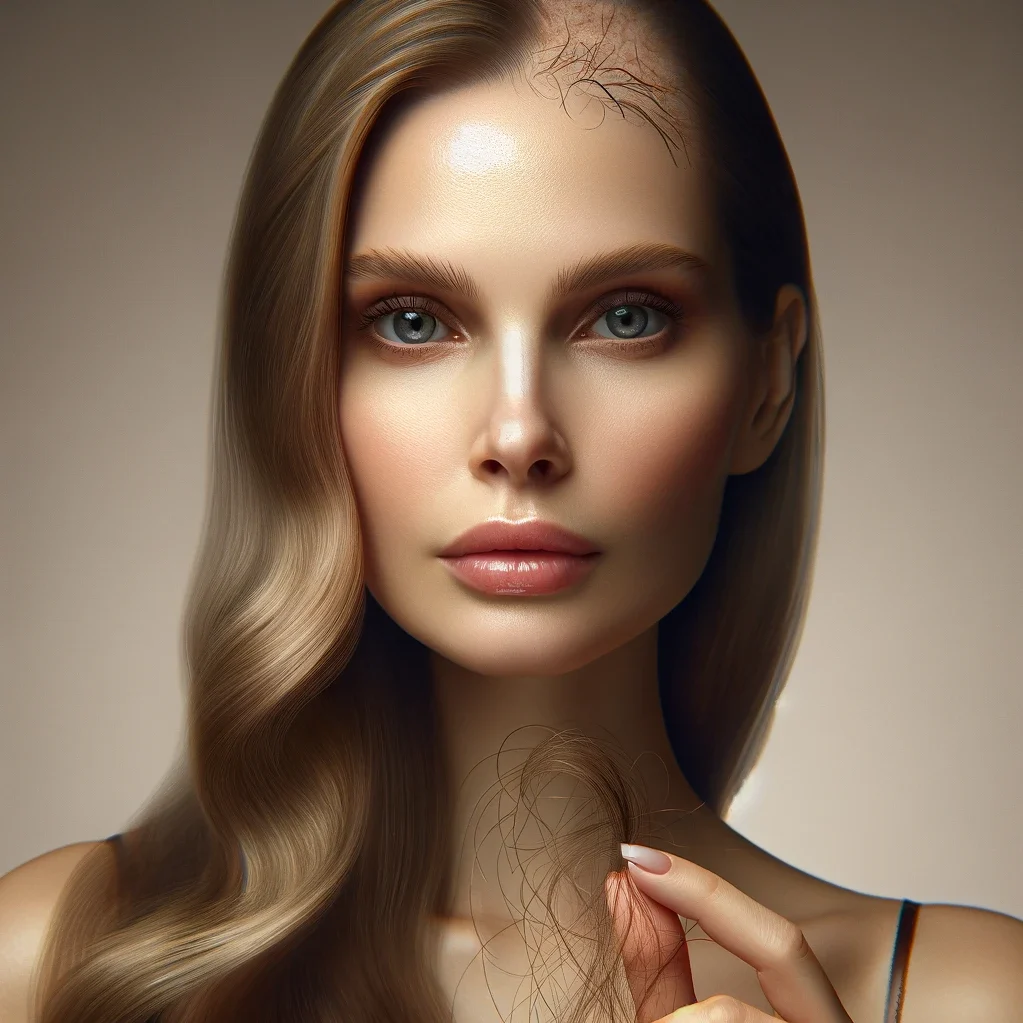

Female pattern baldness, also known as hair thinning at the front in women, is a common condition that primarily affects the top and crown of the scalp. While the front hairline remains mostly unaffected, except for normal recession with age, the widening through the center hair part can lead to noticeable hair thinning. Although the exact cause of female pattern baldness is not well understood, factors such as aging, hormone fluctuations, family history of baldness, heavy menstrual bleeding, and certain medications may play a role.
Diagnosing female pattern baldness involves ruling out other causes of hair loss and evaluating the pattern and appearance of hair thinning. While hair loss in this condition is usually permanent, various treatment options can help slow down or stop further hair loss and stimulate regrowth.
The primary treatment for female frontal hair thinning is minoxidil, a topical solution that can be applied directly to the scalp. Minoxidil has been approved by the FDA and has shown efficacy in slowing down hair loss and promoting hair regrowth in a significant number of women. Other medications, such as spironolactone, may also be recommended in certain cases. For women who are not responsive to medical treatment, hair transplant procedures can be considered as a more permanent solution. Additionally, there are options like hair weaving, hairpieces, or changes in hairstyle to improve the appearance of hair loss.
It’s important to seek medical advice and support for managing female frontal hair thinning. A healthcare professional can provide an accurate diagnosis, discuss suitable treatment options, and offer emotional support during this journey.
Key Takeaways:
- Female pattern baldness is the most common type of hair loss in women, characterized by hair thinning mainly on the top and crown of the scalp.
- Treatment options for female frontal hair thinning include minoxidil, other medications like spironolactone, hair transplant procedures, and other hair enhancement solutions.
- Diagnosing female pattern baldness involves ruling out other causes of hair loss and evaluating the pattern and appearance of hair thinning.
- It is important to seek medical advice and support to address any self-esteem issues that may arise from hair loss.
- Coping strategies, such as embracing new hairstyles and seeking emotional support, can help in managing the emotional impact of female frontal hair thinning.
Understanding Female Pattern Baldness
Female pattern baldness, or female pattern hair loss, is a common condition that affects women primarily on the top and crown of the scalp. This type of hair thinning follows a distinctive pattern known as a “Christmas tree pattern.” Unlike male pattern baldness, which often results in a receding hairline, female pattern baldness typically spares the front hairline.
The exact causes of female pattern baldness are not fully understood. However, several factors may contribute to its development. Aging is a significant factor, as hair follicles tend to become smaller and produce thinner hairs over time. Hormonal changes, such as fluctuations in androgen levels, can also play a role in triggering female pattern hair loss. A family history of baldness, heavy menstrual bleeding, and certain medications, including estrogenic oral contraceptives, may increase the risk of developing this condition. It’s important to note that itching or skin sores on the scalp are generally not associated with female pattern baldness.
Diagnosing female pattern baldness involves ruling out other potential causes of hair loss. Healthcare providers typically evaluate the pattern and appearance of the hair thinning. Additionally, signs and symptoms of excess androgens, such as abnormal hair growth or changes in menstrual periods, may require further diagnostic tests. While female pattern baldness is primarily a cosmetic concern, seeking professional medical advice can help address any underlying hormonal imbalances or other potential issues.
Treatment Options and Medications for Female Frontal Hair Thinning
When it comes to treating female frontal hair thinning, there are several options available to help restore hair growth and improve the appearance of hair loss. The primary treatment recommended for female pattern baldness is minoxidil, a topical solution approved by the FDA. Minoxidil is available in 2% or 5% formulations and has been shown to stimulate hair growth in approximately 1 in 4 or 5 women. However, it’s important to note that minoxidil needs to be used continuously for long-term results, as hair loss may resume once the treatment is discontinued.
If minoxidil is not effective in treating hair thinning at the front, other medications such as spironolactone, cimetidine, birth control pills, or ketoconazole may be recommended by healthcare professionals. These medications can help address hormonal imbalances and promote hair regrowth. Hair transplantation is also an option for women who do not respond well to medical treatments. This procedure involves the removal of hair from thicker areas of the scalp and its transplantation into areas with hair loss, resulting in natural-looking regrowth.
For women who prefer non-surgical approaches, there are alternative solutions such as hair weaving, hairpieces, and changes in hairstyle that can help improve the appearance of hair loss. Embracing new hairstyles or experimenting with different hairpieces can provide a temporary solution while waiting for regrowth. Additionally, making changes to boost confidence and enhance appearance can have a positive impact on self-esteem.
It’s important to note that there is currently no known prevention for female pattern baldness, and the effectiveness of treatment options may vary for each individual. Therefore, consulting with a healthcare professional is crucial to receive an accurate diagnosis and personalized treatment plan.
Comparison of Treatment Options
| Treatment | Overview | Effectiveness | Considerations |
|---|---|---|---|
| Minoxidil | A topical solution applied to the scalp | Stimulates hair growth in approximately 1 in 4 or 5 women | Continuous use is required for long-term results |
| Spironolactone | An androgen blocker | Addresses hormonal imbalances that contribute to hair loss | May have side effects and requires monitoring |
| Hair Transplantation | Surgical procedure involving hair grafting | Can provide natural-looking regrowth | Requires evaluation by a qualified specialist and a recovery period |
| Hair Weaving, Hairpieces, and Changes in Hairstyle | Non-surgical options to improve the appearance of hair loss | Provides temporary solutions while waiting for regrowth | Requires maintenance and adjustment |
Note: The effectiveness and suitability of each treatment option may vary depending on individual factors. Consultation with a healthcare professional is advised to determine the best course of action.

Recognizing the Signs of Female Frontal Hair Thinning
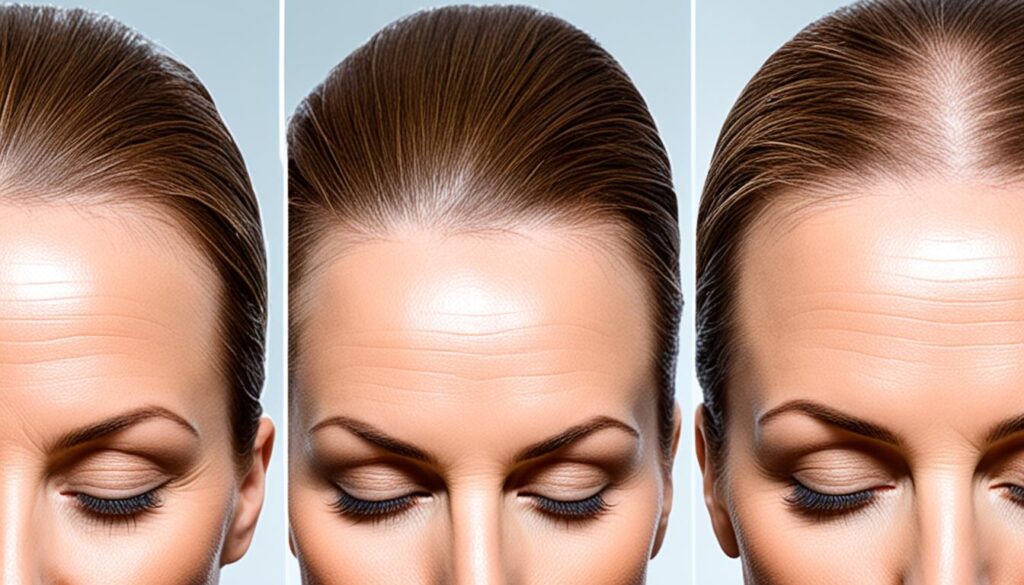
Female pattern baldness, also known as female pattern hair loss, is a common condition that primarily affects the top and crown of the scalp in a distinctive pattern. Recognizing the signs of female frontal hair thinning is crucial for timely diagnosis and management. By understanding the symptoms and taking appropriate steps, women can seek the necessary treatment and support to maintain their self-confidence and well-being.
Signs of Female Pattern Baldness
Female pattern baldness typically presents with the following signs:
- A widening hair part: One of the early signs of female frontal hair thinning is a noticeable widening of the hair part. Women may observe that their part has become wider than usual, indicating hair thinning in the affected area.
- Hair thinning on the top and crown: Another common sign is overall hair thinning on the top and crown of the scalp. This can result in a decrease in hair volume and density in these areas.
- Unaffected front hairline: Unlike male pattern baldness, the front hairline in females usually remains intact, with only minimal recession due to normal aging.
- Absence of itching or skin sores: Itching or skin sores on the scalp are generally not associated with female pattern baldness. If these symptoms are present, they may indicate underlying scalp conditions that require medical attention.
Recognizing these signs can raise awareness and prompt women to seek professional evaluation and diagnosis for their hair thinning concerns.
Diagnosing Female Frontal Hair Thinning
Diagnosing female frontal hair thinning involves a comprehensive evaluation to rule out other potential causes of hair loss and confirm the pattern of female pattern baldness. Healthcare providers may employ the following diagnostic approaches:
- Medical history review: Healthcare professionals will assess the patient’s medical history to identify any underlying conditions or medications that might contribute to hair thinning.
- Physical examination: A thorough examination of the scalp, hair, and associated areas helps evaluate the pattern and extent of hair loss.
- Additional tests: In some cases, healthcare providers may order additional tests like a skin biopsy of the scalp or blood tests to rule out other causes of hair loss, such as hormonal imbalances or underlying skin disorders.
If you experience hair loss, especially if it persists or is accompanied by itching or skin irritation, it’s important to consult with a healthcare professional for an accurate diagnosis and appropriate treatment options.
“Early recognition and diagnosis of female frontal hair thinning are crucial for effective management and preservation of self-esteem.”
By recognizing the signs of female frontal hair thinning and seeking timely diagnosis, women can take proactive steps to manage their hair loss and improve their overall well-being.
Coping Strategies and Emotional Impact of Female Frontal Hair Thinning
The Emotional Toll of Hair Loss
Hair loss, especially in cases of female pattern baldness, can have a profound emotional impact on women. It affects their self-esteem, body image, and overall well-being. The emotional toll of losing hair can be overwhelming, causing feelings of insecurity, embarrassment, and frustration. Women may feel self-conscious about their appearance and struggle with a sense of loss and grief over their changing physical image.
Recognizing the Emotional Impact
It’s crucial to acknowledge the emotional impact of female frontal hair thinning. Understanding that hair loss is not just a physical issue but one that deeply affects a woman’s identity and confidence is the first step towards finding coping strategies that work. By recognizing the emotional weight of hair loss, women can seek support and take proactive steps towards self-acceptance and emotional well-being.
Finding Coping Strategies
There are various coping strategies that women can employ to navigate the emotional challenges of hair loss. These strategies include:
- Embracing new hairstyles or hairpieces to enhance appearance and restore confidence.
- Utilizing hair weaving techniques to create the illusion of thicker hair.
- Exploring different styling techniques that can minimize the appearance of hair thinning.
- Seeking professional help from hairstylists who specialize in working with thinning hair.
Emotional Support and Resources
Emotional support plays a vital role in helping women cope with hair loss. Friends, family, and support groups can offer understanding, empathy, and a safe space to share experiences. Connecting with others who are going through similar challenges can provide a sense of community and validation. Support groups, both online and offline, offer valuable resources, guidance, and a platform to discuss feelings and concerns related to hair loss.
“Remember, you are not alone. Many women experience hair loss, and there are resources and communities available to provide support and guidance.”
| Benefits of Seeking Emotional Support | Support Resources |
|---|---|
| Validation and understanding. | Online hair loss support groups. |
| Opportunity to share experiences and learn from others. | Professional counseling or therapy. |
| Emotional healing and empowerment. | Support from friends and family. |
By seeking emotional support and utilizing coping strategies, women can navigate the emotional impact of female frontal hair thinning more effectively. Remember, hair loss does not define a woman’s worth or beauty. With the right support and mindset, women can embrace their unique journey and find confidence and emotional well-being regardless of societal standards.
Conclusion
Female frontal hair thinning, also known as female pattern baldness, is a common type of hair loss that primarily affects the top and crown of the scalp in a “Christmas tree pattern.” While the exact cause of female pattern baldness is not fully understood, it may be influenced by factors such as aging, hormonal changes, genetics, and certain medications.
Diagnosing female frontal hair thinning involves ruling out other potential causes of hair loss and evaluating the pattern and appearance of hair thinning. Treatment options for this condition include minoxidil and other medications like spironolactone, as well as hair transplantation and solutions such as hair weaving or changes in hairstyle. It is crucial to consult with a healthcare professional to receive an accurate diagnosis and discuss the best treatment approach for individual needs.
Managing female frontal hair thinning goes beyond medical intervention alone. Coping strategies and emotional support play a vital role in maintaining self-confidence. Exploring different hairstyles, utilizing hairpieces, and seeking support from friends, family, or support groups can help individuals navigate the emotional impact of hair loss. While female pattern baldness is usually permanent, there are various treatment options available to manage the condition and improve self-confidence.
FAQ
What are the treatment options for female frontal hair thinning?
Treatment options for female frontal hair thinning include minoxidil, other medications like spironolactone, hair transplantation, and alternative solutions like hair weaving or changes in hairstyle.
What is female pattern baldness?
Female pattern baldness, also known as female pattern hair loss, is a common type of hair loss that primarily affects the top and crown of the scalp in a “Christmas tree pattern.”
How can female frontal hair thinning be diagnosed?
Female frontal hair thinning is usually diagnosed by ruling out other potential causes of hair loss and evaluating the pattern and appearance of hair thinning. Additional tests like a skin biopsy of the scalp or blood tests may be ordered in some cases.
What are the signs of female frontal hair thinning?
Signs of female frontal hair thinning include a widening hair part and overall hair thinning on the top and crown of the scalp. The front hairline usually remains intact, apart from normal recession that occurs with age.
How can women cope with the emotional impact of frontal hair thinning?
Coping strategies for dealing with frontal hair thinning include embracing new hairstyles or hairpieces, utilizing hair weaving techniques, and seeking support from friends, family, or support groups to help navigate the emotional aspects of hair loss.
What is the most common treatment for female frontal hair thinning?
The most common treatment for female frontal hair thinning is minoxidil, a topical solution that can help stimulate hair growth. Other medications like spironolactone may also be recommended if minoxidil is not effective.