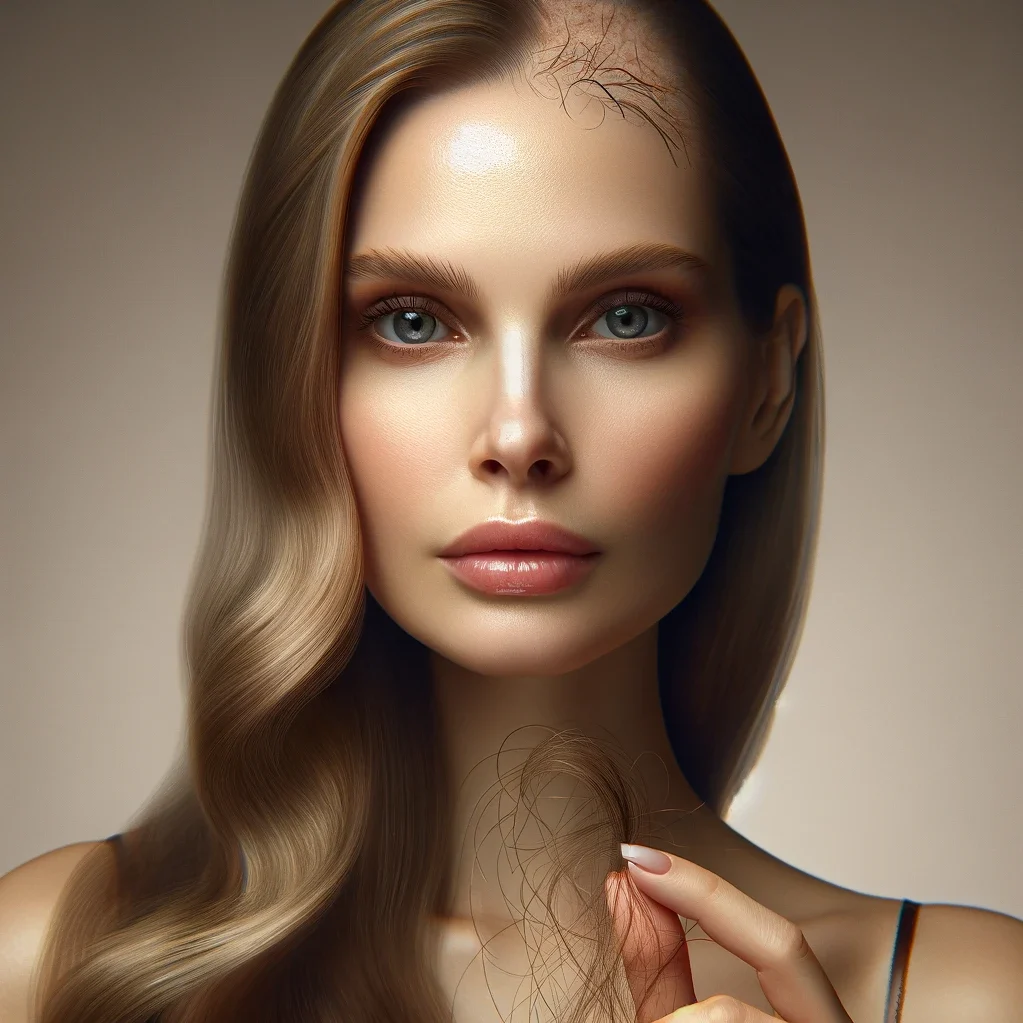
Hair loss is not just a problem that affects men; it is also incredibly common in women. By the age of 50, up to 40% of women will experience noticeable hair loss. Thinning hair in women often presents differently than in men, with a widening part or a thinner ponytail being common signs.
The growth cycle of hair consists of three phases: anagen, catagen, and telogen. During the telogen phase, strands of hair naturally fall out. However, if there is a sudden increase in hair shedding or visible areas of thinning, it is important to consult a doctor.
Hair loss in women can be attributed to various factors, including medication side effects, high stress or trauma, childbirth, severe infections, crash diets, deficiencies in iron or vitamin D, psychological stress, thyroid disease, and hormonal imbalances such as polycystic ovarian syndrome (PCOS).
The most common type of hair loss in women is female pattern hair loss (FPHL), also known as androgenetic alopecia, which affects millions of women in their 40s, 50s, and 60s. FPHL is commonly inherited and may be exacerbated by hormonal changes during menopause.
Treatment options for hair loss in women include topical minoxidil, low-light lasers, prescription oral medications like finasteride and spironolactone (which are off-label uses for female pattern hair loss), platelet-rich plasma therapy, and microneedling. It is recommended to consult a doctor for proper diagnosis and personalized treatment options.
Key Takeaways:
- Hair loss is common in women, affecting up to 40% by the age of 50.
- Thinning hair in women may present with a widening part or a thinner ponytail.
- Various factors contribute to hair loss in women, including medication side effects, stress, childbirth, and hormonal imbalances.
- Female pattern hair loss (FPHL) is the most common type of hair loss in women, often inherited and worsened by menopause.
- Treatment options for hair loss in women include topical minoxidil, low-light lasers, prescription medications, platelet-rich plasma therapy, and microneedling.
Understanding the Hair Growth Cycle and Types of Hair Loss
The hair growth cycle consists of three phases: anagen, catagen, and telogen. During the anagen phase, which typically lasts 2 to 8 years, about 90% of the hair on the head is in the active growth phase. The catagen phase is a short transition phase lasting 2 to 3 weeks, during which hair follicles shrink and hair growth ceases. Finally, the telogen phase is a resting phase that lasts from 2 to 4 months, after which the old strand of hair falls out and new hair begins to grow in its place.
It is normal to lose 50 to 100 strands of hair per day, but if there is a sudden increase in hair shedding or visible patches of scalp, it may be a sign of hair loss.
Female pattern baldness, or androgenetic alopecia, is the most common type of hair loss in women. It typically starts with gradual hair thinning and loss along the top-central portion of the head and the hair parting area. Hormonal changes during menopause and genetic predisposition are major contributing factors to female pattern baldness.
Other types of hair loss in women include anagen effluvium (caused by medications that harm hair follicles) and telogen effluvium (caused by factors such as illness, stress, nutrient deficiencies, medications, and hormonal changes).
It is important to identify the underlying cause of hair loss in order to determine the most appropriate treatment.
Treatment Options and Prevention of Hair Loss in Women
There are various treatment options available for women experiencing hair loss. One common option is topical minoxidil, which is FDA-approved for both male and female pattern baldness. Available over-the-counter in 2% and 5% strengths, minoxidil helps stimulate hair growth. Another option is low-light lasers, such as laser combs and caps, which use low-energy light to stimulate hair follicles and have earned FDA approval.
In addition, prescription oral medications like finasteride and spironolactone, although not specifically approved for female pattern hair loss, are sometimes used off-label by dermatologists. Platelet-rich plasma therapy is another treatment option, involving injecting plasma from the patient’s blood into the scalp. Microneedling, often used alongside topical minoxidil, can also help stimulate hair growth.
When considering treatment options, it is important to consult a doctor to determine the most suitable approach based on individual needs and preferences. In addition to treatment, there are steps that can be taken to prevent or minimize hair loss in women. These include being gentle with the hair, avoiding harsh treatments such as hot rollers, curling irons, and hot-oil treatments, protecting the hair from sunlight and ultraviolet light, quitting smoking (as studies have shown a link between smoking and baldness in men), and maintaining a nutritious diet.
If you are experiencing sudden or patchy hair loss, or more hair loss than usual, it is recommended to see a doctor to assess and address any underlying medical conditions that may be contributing to the hair loss. Taking proactive steps and seeking appropriate treatment can help women restore and maintain healthy hair.
FAQ
What are the common causes of hair fall in women?
Hair fall in women can be caused by various factors, including medication side effects, high stress or trauma, childbirth, severe infections, crash diets, deficiencies in iron or vitamin D, psychological stress, thyroid disease, and hormonal imbalances such as polycystic ovarian syndrome (PCOS).
What is female pattern baldness?
Female pattern baldness, also known as androgenetic alopecia, is the most common type of hair loss in women. It typically starts with gradual hair thinning and loss along the top-central portion of the head and the hair parting area.
What are the types of hair loss in women?
Other types of hair loss in women include anagen effluvium (caused by medications that harm hair follicles) and telogen effluvium (caused by factors such as illness, stress, nutrient deficiencies, medications, and hormonal changes).
What treatment options are available for hair loss in women?
Treatment options for hair loss in women include topical minoxidil, low-light lasers, prescription oral medications like finasteride and spironolactone (which are off-label uses for female pattern hair loss), platelet-rich plasma therapy, and microneedling. It is recommended to consult a doctor for proper diagnosis and personalized treatment options.
How can I prevent or minimize hair loss?
Steps that can be taken to prevent or minimize hair loss in women include being gentle with the hair, avoiding harsh treatments such as hot rollers, curling irons, and hot-oil treatments, protecting the hair from sunlight and ultraviolet light, quitting smoking, and maintaining a nutritious diet.
When should I see a doctor for hair loss?
If you are experiencing sudden or patchy hair loss, or more hair loss than usual, it is recommended to see a doctor to assess and address any underlying medical conditions that may be contributing to the hair loss.
1 thought on “Understanding Causes of Hair Fall in Women”