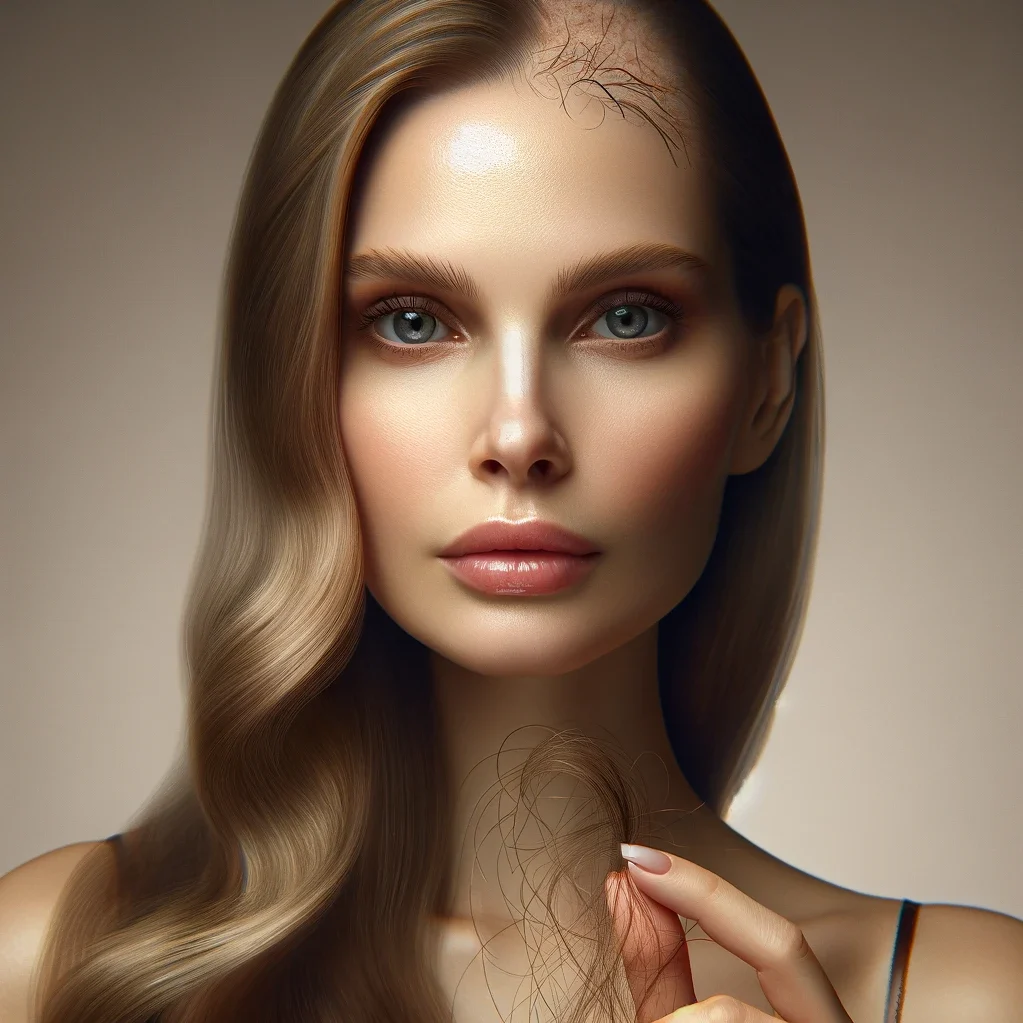
Welcome to our comprehensive guide on hormonal hair loss in women around the age of 30. Hair loss is a common concern for many women, yet it is often not openly discussed. We believe it is essential to provide you with the necessary information to navigate this challenging situation.
Let’s start by understanding the different stages of hair growth. Hair growth goes through four phases: the anagen phase, catagen phase, telogen phase, and exogen phase. Hormonal hair loss in women occurs when the shedding rate exceeds the regrowth rate, leading to thinning hair and visible scalp.
Hair loss in women can be gradual or sudden and may indicate underlying health conditions or hormonal imbalances. Some common types of hair loss in women include androgenetic alopecia (female pattern baldness), frontal fibrosing alopecia, alopecia areata, central centrifugal cicatricial alopecia, traction alopecia, telogen effluvium, and anagen effluvium.
It is estimated that hair loss affects 6% to 38% of healthy women, making it a prevalent issue. In fact, 40% of hair loss sufferers in the United States are women. If you are experiencing hair loss, it is essential to remember that you are not alone, and there are solutions available to address the issue.
Causes of Hormonal Hair Loss in Women Around 30
There are several factors that can contribute to hormonal hair loss in women around the age of 30. Hormonal imbalances, such as an increase in androgens (male hormones) or changes in thyroid hormone levels, can lead to hair loss. Conditions like polycystic ovary syndrome (PCOS), ovarian cancer, and uterine cancer can also cause hormonal imbalances and subsequent hair loss.
Genetic factors play a role in female hair loss, with androgenetic alopecia (female pattern baldness) being a common condition attributed to genetics and hormones. Other causes of hair loss in women include aging, certain medications, physical or emotional stress, nutritional deficiencies, autoimmune reactions, and hair styling practices that cause tension on the hair. It is important to identify the specific cause of hair loss in order to determine the most appropriate treatment options.
“Hormonal imbalances, such as an increase in androgens or changes in thyroid hormone levels, can lead to hair loss in women.”
Common Causes of Hormonal Hair Loss in Women Around 30:
- Hormonal imbalances (increase in androgens or changes in thyroid hormone levels)
- Polycystic ovary syndrome (PCOS)
- Ovarian and uterine cancer
- Genetics (androgenetic alopecia)
- Aging
- Certain medications
- Physical or emotional stress
- Nutritional deficiencies
- Autoimmune reactions
- Hair styling practices causing tension on the hair
Identifying the underlying cause of hair loss is crucial for finding effective remedies. Let’s explore the available treatments for hormonal hair loss in women around 30 in Section 3.
Hair Loss Treatments for Women
When it comes to addressing hair loss in women, there are several treatment options available that can help prevent hair loss and promote regrowth. Whether you’re dealing with hormonal hair loss or other forms of hair loss, finding the right treatment approach can make a significant difference.
Topical Minoxidil
One of the most popular over-the-counter treatments for hair loss in women is topical minoxidil. This medication is applied directly to the scalp and helps slow down hair loss while promoting new hair growth. It is important to follow the instructions provided and give it time to show noticeable results.
Low-Light Lasers
Low-light lasers can stimulate hair follicles with low-energy light, which may help revitalize hair growth. These lasers are available in the form of combs or caps that can be used at home. Regular use of low-light lasers can potentially improve hair density and thickness over time.
Prescription Medications
In some cases, prescription oral medications like finasteride and spironolactone may be used off-label to treat hair loss in women. These medications work to inhibit the effects of specific hormones that contribute to hair loss, and their use should be under the guidance of a healthcare professional.
Platelet-Rich Plasma Injections and Microneedling
Platelet-rich plasma (PRP) injections and microneedling are two procedures that can assist with hair regrowth. PRP involves injecting a concentrated solution of the patient’s own platelets into the scalp to stimulate hair follicle activity. Microneedling, on the other hand, creates microscopic punctures in the scalp, which can improve blood circulation and promote hair growth.
Addressing Underlying Hormonal Imbalances
In addition to medical treatments, addressing underlying hormonal imbalances is crucial in managing hair loss in women. This may involve hormone therapy or lifestyle modifications to restore hormonal balance. Consulting with a healthcare professional who specializes in hormonal health can provide valuable guidance.
Natural Remedies and Hair Care Practices
Many women turn to natural remedies as complementary treatments for hair loss. Essential oils like rosemary, lavender, and cedarwood, as well as herbal supplements like saw palmetto and biotin, are often used to promote hair growth. Additionally, maintaining a healthy diet, managing stress levels, and avoiding hairstyles that cause tension on the hair can help prevent further hair loss.
Remember, it’s essential to consult with a healthcare professional to determine the most suitable treatment approach based on the specific cause of hair loss. Each woman’s experience with hair loss is unique, and a personalized treatment plan can yield the best results in addressing hair loss and restoring confidence.
| Treatment Options | Description |
|---|---|
| Topical Minoxidil | A popular over-the-counter treatment that helps slow down hair loss and promote hair growth. |
| Low-Light Lasers | Stimulates hair follicles with low-energy light, potentially improving hair density and thickness over time. |
| Prescription Medications | Medications like finasteride and spironolactone may be used off-label to inhibit hormone-induced hair loss. |
| Platelet-Rich Plasma Injections | Involves injecting a concentrated solution of the patient’s own platelets into the scalp to stimulate hair follicle activity. |
| Microneedling | Creates microscopic punctures in the scalp to improve blood circulation and promote hair growth. |
| Natural Remedies and Hair Care Practices | Using essential oils, herbal supplements, maintaining a healthy diet, managing stress levels, and avoiding hairstyling practices that cause tension on the hair. |
Conclusion
Hormonal hair loss in women around the age of 30 is an unfortunate reality that many women face. It can be a distressing and challenging experience, but there is hope. By understanding the different stages of hair growth and the underlying causes of hair loss, women can take control of their hair health and explore effective treatment options.
Genetic and hormonal factors often play a significant role in hair loss, but that doesn’t mean it’s an unsolvable problem. Women have a range of treatment options to address hair loss, including topical treatments, oral medications, and in-office procedures. Consulting with a healthcare professional is crucial in determining the cause of hair loss and finding the most suitable treatment approach.
In addition to medical interventions, it is important for women to address underlying hormonal imbalances, adopt healthy hair care practices, and manage stress levels. These lifestyle changes can complement the treatment plan and promote hair regrowth. It’s a holistic approach that considers the root causes of hair loss, providing women with a comprehensive strategy to regain their hair health and confidence.
Remember, you are not alone in this journey. Many women have successfully navigated hormonal hair loss and regained their thick and healthy hair. With the right treatment, guidance, and support, you can overcome this challenge and embrace a vibrant, confident self once again.
FAQ
What is hormonal hair loss in women around 30?
Hormonal hair loss in women around the age of 30 refers to the excessive shedding of hair due to hormonal imbalances or changes in the body. This can result in thinning or balding patches on the scalp.
What are the causes of hormonal hair loss in women around 30?
Hormonal hair loss in women around 30 can be caused by factors such as hormonal imbalances, genetic predisposition, aging, certain medications, physical or emotional stress, nutritional deficiencies, autoimmune reactions, and hair styling practices that cause tension on the hair.
What treatment options are available for hair loss in women?
Hair loss in women can be treated through various methods, including topical minoxidil, low-light lasers, prescription oral medications like finasteride and spironolactone, platelet-rich plasma injections, and microneedling. It is important to consult with a healthcare professional to determine the most suitable treatment approach based on the specific cause of hair loss.
How can I prevent hair loss in women around 30?
To prevent hair loss in women around 30, it is important to address underlying hormonal imbalances, maintain a healthy diet, manage stress levels, and avoid hairstyles that cause tension on the hair. Additionally, using natural remedies such as essential oils or herbal supplements may be considered as complementary treatments.