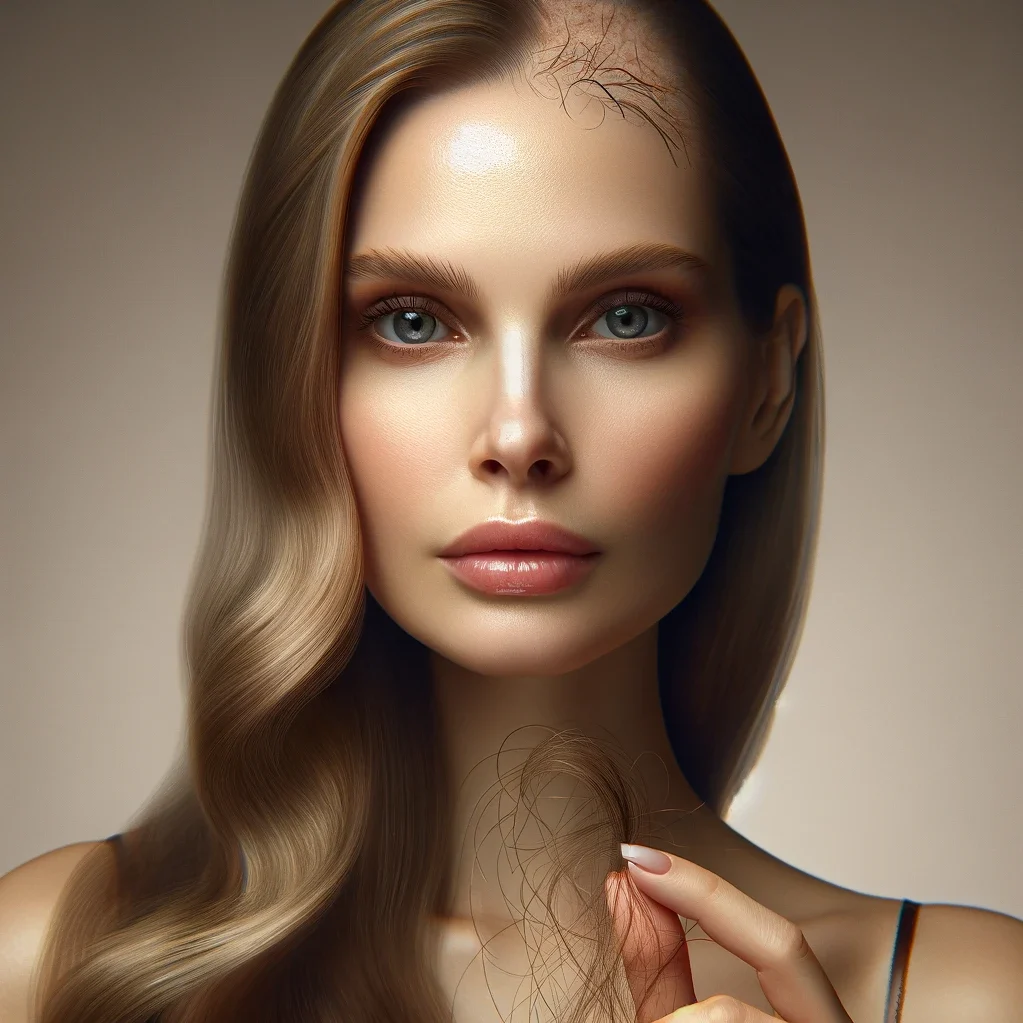
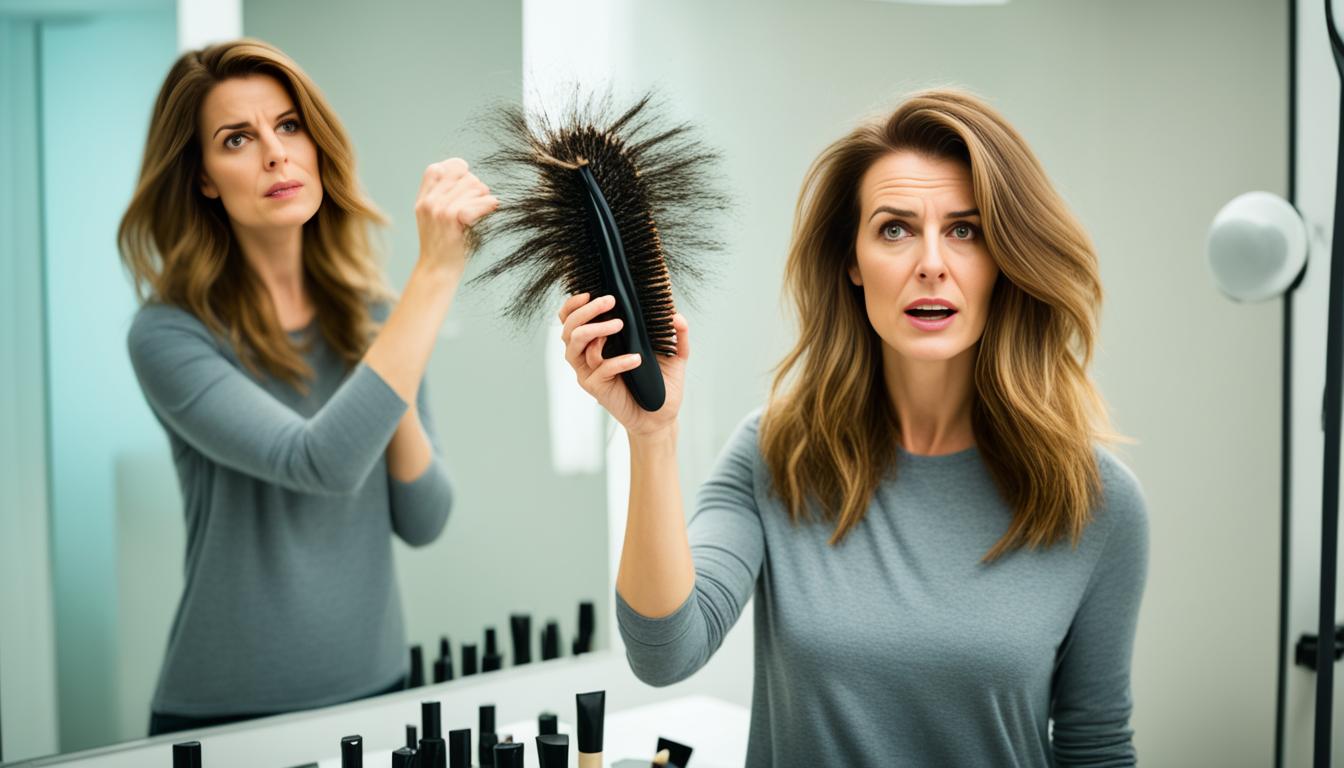
Hair loss can be a distressing issue for many people, affecting their appearance and self-confidence. While it’s normal to lose around 100 hairs a day, excessive hair loss may be a sign of an underlying medical condition. In this section, we’ll explore expert tips and strategies to help you conquer severe hair fall. We’ll cover the causes of hair loss, natural remedies, and medical treatments to promote hair regrowth and combat balding.
Key Takeaways:
- Severe hair fall can be caused by various factors, including genetic predisposition, hormonal imbalances, and certain medical conditions.
- Adopting a balanced diet rich in hair-healthy nutrients, such as protein, vitamins, and minerals, can help prevent hair loss and promote hair regrowth.
- Maintaining a regular hair care routine, including gentle washing, scalp massage, and avoiding harsh chemicals and heat styling, can minimize hair loss.
- Medical treatments such as low-level laser therapy, platelet-rich plasma injections, and medications like minoxidil and finasteride may be recommended for severe cases of hair loss.
- Consulting with a healthcare professional is essential to determine the underlying cause of severe hair fall and develop an appropriate treatment plan.
Dietary Tips to Prevent Hair Loss
The Mediterranean diet has been found to reduce the risk of androgenic alopecia, or male and female pattern baldness. This diet emphasizes the consumption of raw vegetables and fresh herbs, such as parsley and basil, which are rich in hair-healthy nutrients. Protein is also essential for healthy hair, as hair follicles are mainly made of keratin, a protein. Vitamin A, found in foods like sweet potatoes and spinach, supports healthy hair growth. Supplements like multivitamins, vitamin D, biotin, saw palmetto, and ginseng can also be beneficial for preventing hair loss and promoting hair regrowth.
When it comes to preventing hair loss and promoting hair regrowth, a well-balanced diet plays a crucial role. By incorporating the right nutrients, you can strengthen your hair follicles and promote overall scalp health. Here are some dietary tips to help prevent hair loss and support hair regrowth:
- Follow the Mediterranean diet: This diet is rich in raw vegetables, fresh herbs, and healthy fats like olive oil. These nutrients provide essential vitamins and minerals that nourish the hair follicles and promote hair growth.
- Increase your protein intake: Hair follicles are mainly composed of a protein called keratin. Consuming an adequate amount of protein from sources such as lean meats, poultry, fish, eggs, legumes, and nuts can support healthy hair growth.
- Incorporate foods rich in vitamin A: Vitamin A is crucial for maintaining healthy hair. Include foods like sweet potatoes, carrots, spinach, and kale in your diet to boost your vitamin A intake.
- Consider supplements: In addition to a balanced diet, certain supplements can support hair health. Multivitamins, vitamin D, biotin, saw palmetto, and ginseng are commonly used for preventing hair loss and promoting hair regrowth.
Remember, maintaining a healthy diet is just one aspect of preventing hair loss. It’s also important to practice good hair care habits and seek medical advice if you’re experiencing severe hair fall. In the next section, we’ll explore hair care practices that can minimize hair loss and promote hair growth.
Expert Tip: The Power of the Mediterranean Diet
“The Mediterranean diet is not only great for overall health but also offers significant benefits for hair growth. Its emphasis on fresh, nutrient-dense foods provides the essential vitamins and minerals needed for strong hair follicles. Incorporating this diet into your lifestyle can help prevent hair loss and promote shiny, voluminous hair.” – Dr. Sarah Johnson, MD, Dermatologist
Hair Care Practices to Minimize Hair Loss
Maintaining a healthy scalp and hair care routine is crucial for minimizing severe hair fall and promoting hair growth. By following the right practices, you can safeguard your hair from damage and prevent further hair loss.
1. Use a Mild Shampoo
Regularly washing your hair with a mild shampoo can help protect your scalp and prevent breakage. Look for shampoos specifically designed for thinning hair or hair loss treatment. These shampoos are formulated to nourish the scalp and strengthen the hair follicles, promoting healthier hair growth. Avoid shampoos that contain harsh chemicals or sulfates, as they can strip away natural oils and damage the hair.
2. Harness the Power of Coconut Oil
Coconut oil has long been hailed for its benefits in promoting hair growth and preventing hair loss. Massaging warm coconut oil onto the scalp helps improve blood circulation, nourish the hair follicles, and strengthen the hair strands. As a natural emollient, coconut oil also helps retain moisture, preventing dryness and breakage. Apply coconut oil to your hair regularly as a deep conditioning treatment to promote healthy hair growth.

3. Embrace the Benefits of Olive Oil
In addition to coconut oil, olive oil is another excellent option for hair care. Its moisturizing properties help protect the hair from dryness, making it less prone to breakage. Applying warm olive oil to the hair and scalp can provide deep conditioning, leaving your hair smooth, shiny, and resilient. For best results, leave the oil on for at least 30 minutes before washing it out.
4. Gentle Styling is Key
Avoid hairstyles that pull tightly on the hair, such as tight ponytails, braids, or buns. Traction alopecia, a form of hair loss caused by tension on the hair follicles, can result from these tight styles. Opt for looser hairstyles that allow your hair to breathe and grow naturally. Likewise, minimize the use of heat styling tools like straighteners and curling irons, as excessive heat can damage the hair and lead to breakage.
5. Say No to Chemical Treatments
Avoid chemical treatments such as perming, relaxing, or bleaching your hair. These processes can weaken the hair strands, making them more susceptible to breakage and hair loss. If you need to color your hair, opt for organic hair dyes that are ammonia-free and gentle on the hair and scalp.
By incorporating these hair care practices into your routine, you can significantly minimize hair loss and promote healthy hair growth.
Medical Treatments for Severe Hair Fall
In some cases, severe hair fall requires medical interventions to effectively address the issue. Various treatment options can help promote hair growth and combat hair loss. Low-level laser therapy, also known as red light therapy, is a non-invasive procedure that utilizes laser technology to improve hair density and stimulate hair follicle growth. This treatment is particularly beneficial for individuals experiencing pattern baldness or thinning hair.
Platelet-rich plasma (PRP) injections are another medical treatment option for severe hair fall. PRP therapy involves extracting a patient’s blood and separating the platelet-rich plasma, which is then injected into the areas affected by hair loss. This stimulates the hair follicles and encourages the growth of new hair, resulting in thicker and fuller hair.
There are also medications available for treating severe hair fall. One such medication is minoxidil, which is often sold over-the-counter under the brand name Rogaine. Minoxidil is a topical solution that promotes hair regrowth and can be applied directly to the scalp. Another medication, finasteride, is available through prescription and works by inhibiting the production of DHT, a hormone linked to hair loss. However, it’s essential to note that finasteride may have potential side effects, and consultation with a healthcare professional is advised before starting any medication.
When considering medical treatments for severe hair fall, it is crucial to consult with a trusted healthcare professional who specializes in hair loss treatment. They can provide a personalized assessment and recommend the most suitable treatment options based on individual needs and medical history.
FAQ
What are the causes of severe hair fall?
Severe hair fall can be caused by various factors, including hormonal imbalances, nutritional deficiencies, stress, genetics, certain medications, and underlying medical conditions.
Can diet affect hair loss?
Yes, a balanced diet rich in essential nutrients can promote healthy hair growth and prevent hair loss. Consuming foods like fruits, vegetables, lean proteins, and healthy fats can provide the necessary vitamins and minerals for optimal hair health.
Are there any natural remedies for hair regrowth?
Yes, natural remedies such as consuming a nutrient-rich diet, massaging the scalp with essential oils like coconut oil, and using herbal supplements like saw palmetto and ginseng can help promote hair regrowth.
Is there a specific shampoo that can help with hair loss?
While there are shampoos marketed for thinning hair, it’s important to choose a mild shampoo that suits your hair and scalp type. Look for shampoos that are free of harsh chemicals and sulfates, as these can further damage the hair and scalp.
Can medical treatments help with severe hair fall?
Yes, there are medical treatments available for severe hair fall. Low-level laser therapy, platelet-rich plasma (PRP) injections, and medications like minoxidil and finasteride can be effective in promoting hair growth and reducing hair loss. However, it’s advisable to consult with a healthcare professional before starting any medical treatments.