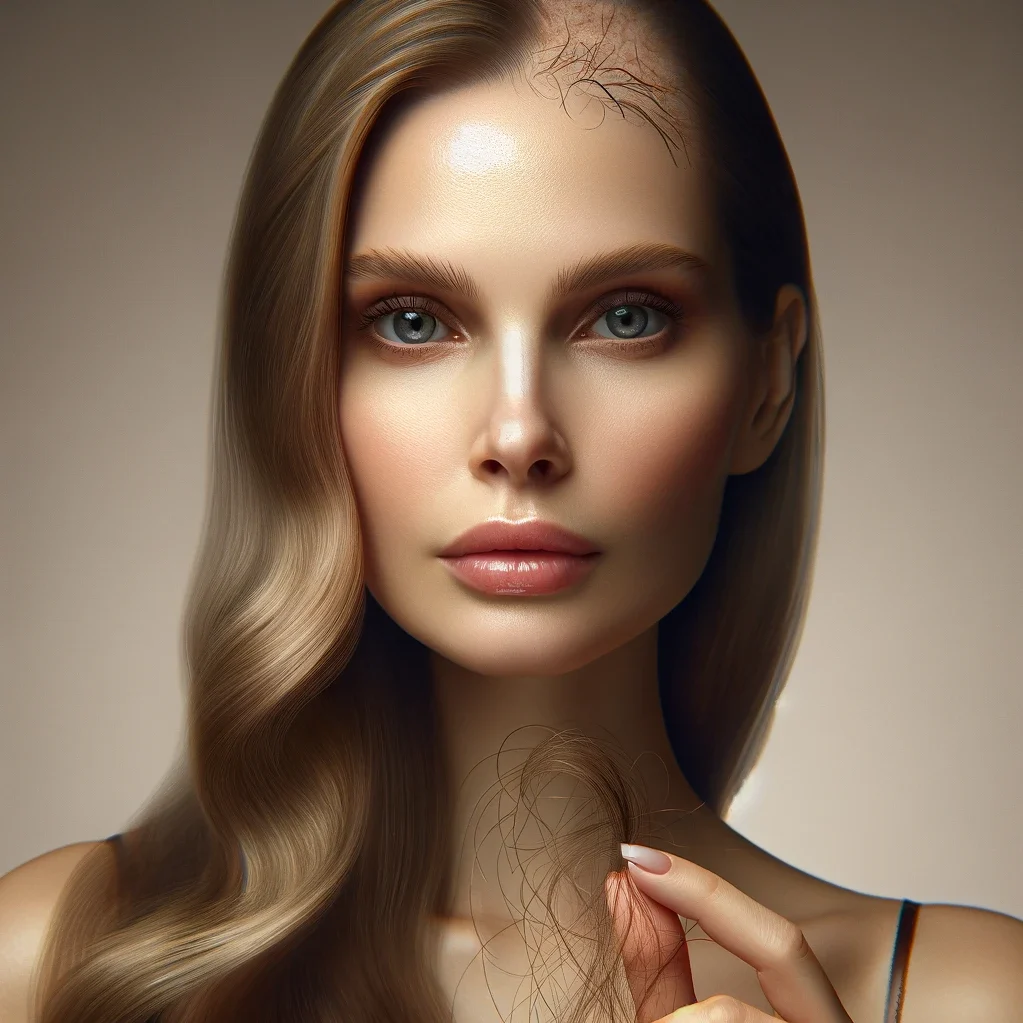
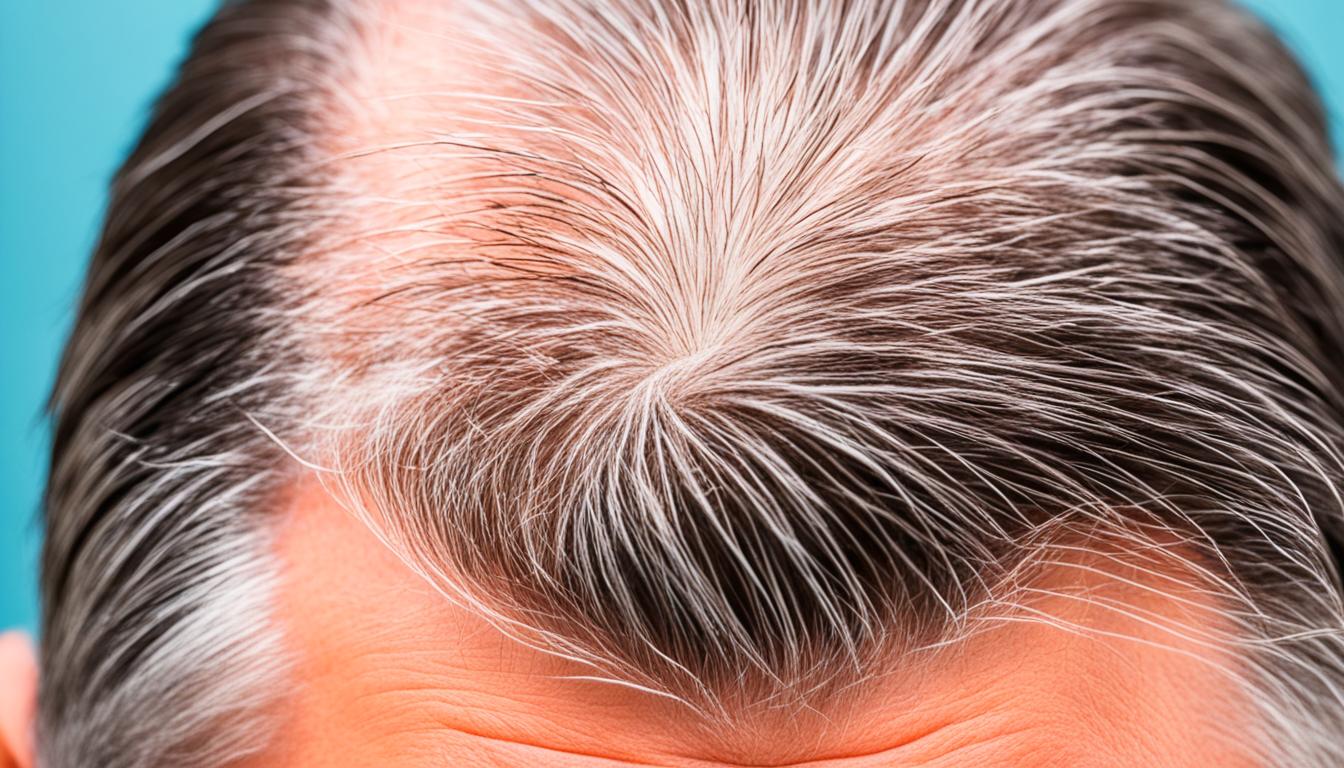
Welcome to our comprehensive guide on understanding DHT hair loss and the available solutions. DHT, or dihydrotestosterone, is a hormone that plays a significant role in hair loss, particularly in male pattern baldness. It is derived from testosterone and can cause hair follicles to shrink, leading to thinning hair and eventual hair loss.
Not only can DHT affect your appearance, but it is also associated with other health conditions such as slow healing, an enlarged prostate, prostate cancer, and coronary heart disease. However, it’s important to note that DHT is necessary for sexual development during puberty.
Fortunately, there are treatments available to combat the effects of DHT on hair loss. From DHT blockers to natural remedies and hair growth supplements, we will explore the various options to help you find the most suitable solution for your needs.
Key Takeaways:
- DHT, derived from testosterone, is a hormone that can cause hair loss, particularly in male pattern baldness.
- DHT affects hair growth by shrinking hair follicles and shortening the hair growth cycle.
- Treatment options for DHT hair loss include DHT blockers, such as finasteride, and topical solutions like minoxidil.
- Natural remedies, such as biotin, pygeum bark, pumpkin seed oil, and caffeine, have shown potential in reducing DHT-related hair loss.
- If you’re experiencing hair loss, it’s important to consult with a healthcare professional to determine the best course of action.
How DHT Affects Hair Growth
DHT, or dihydrotestosterone, plays a crucial role in hair loss, specifically in the context of male pattern baldness. Understanding how DHT affects hair growth is essential in addressing this common concern. When DHT binds to androgen receptors on the hair follicles in the scalp, it triggers a cascade of events that result in hair loss.
The binding of DHT to androgen receptors leads to the shrinkage of hair follicles and a shortening of the hair growth cycle. As a consequence, the affected hair becomes thinner and more brittle over time. Furthermore, DHT’s interference with the hair growth cycle prolongs the time it takes for new hairs to sprout, exacerbating the visible effects of hair loss.
It is important to note that the impact of DHT on hair growth is influenced by genetic factors. Individuals who are genetically predisposed to male pattern baldness tend to have more androgen receptors in their hair follicles, making them more susceptible to DHT’s damaging effects.
To gain a better understanding of how DHT affects hair growth, let’s take a closer look at the hair growth cycle:
- Anagen Phase: This is the active phase of the hair growth cycle, where new hairs are formed and grow. It typically lasts for 2 to 7 years.
- Catagen Phase: In this transitional phase, hair growth slows down, and the hair follicles shrink. It lasts for around 2 to 3 weeks.
- Telogen Phase: Also known as the resting phase, this is when the hair follicles become dormant. Old hairs may shed during this phase, making way for new hairs to grow. The telogen phase can last for 2 to 4 months.
- Exogen Phase: During this phase, the old hairs that were in the telogen phase are shed, allowing new hairs to take their place. It is a normal part of the hair growth cycle and typically lasts for a few days.
However, in the presence of excessive DHT, the hair growth cycle is disrupted, with the anagen phase becoming shorter, and the telogen phase prolonged. This ultimately leads to the thinning of hair and the onset of hair loss.
“The binding of DHT to androgen receptors leads to the shrinkage of hair follicles and a shortening of the hair growth cycle.”
When it comes to tackling DHT-related hair loss, understanding the underlying mechanisms is crucial. In the next section, we will explore various treatment options available to address DHT hair loss, ranging from DHT blockers to natural remedies.
Treatment options for DHT Hair Loss
If you are experiencing hair loss due to DHT, there are several effective treatment options available to help combat this condition. One of the most commonly prescribed treatments is finasteride, which is a DHT blocker. Finasteride works by inhibiting the production of DHT and preventing it from binding to the hair follicles’ androgen receptors. This helps to reduce the shrinkage of follicles and promote healthier hair growth. However, it is essential to consult with a healthcare professional before starting this medication.
Another popular treatment option for DHT hair loss is minoxidil. Minoxidil is a topical solution that widens blood vessels and stimulates hair growth. It can be applied directly to the scalp, allowing it to reach the hair follicles directly. Regular use of minoxidil can help revive dormant follicles and promote thicker hair growth. However, it is important to note that minoxidil may take several months to show noticeable results.
In addition to medication-based treatments, natural remedies can also be effective in reducing DHT-related hair loss. Some natural remedies that have shown potential include biotin, which is a B-vitamin that promotes hair growth; pygeum bark, which may help inhibit DHT production; pumpkin seed oil, which contains antioxidants that may support hair health; and caffeine, which has been shown to stimulate hair follicles and promote hair growth when applied topically.
Before starting any hair loss treatment, it is crucial to consult with a healthcare professional or a dermatologist who specializes in hair restoration. They can provide you with personalized guidance and recommend the best treatment options based on your specific condition. They will also be able to address any concerns or potential side effects associated with these treatments, ensuring your hair loss journey is safe and effective.
FAQ
What is DHT hair loss?
DHT hair loss, also known as androgenetic alopecia or male pattern baldness, is a type of hair loss caused by the hormone dihydrotestosterone (DHT). DHT binds to hair follicles in the scalp, causing them to shrink and leading to thinning hair and eventual hair loss.
What are the treatment options for DHT hair loss?
There are several treatment options for DHT hair loss. DHT blockers, such as finasteride, can be taken orally to inhibit DHT production and prevent further hair loss. Topical minoxidil is another option, which helps to stimulate hair growth. Natural remedies like biotin and pumpkin seed oil may also help reduce DHT-related hair loss.
Can DHT blockers reverse hair loss?
DHT blockers, such as finasteride, can help slow down or stop the progression of hair loss caused by DHT. They work by reducing the levels of DHT in the scalp, allowing hair follicles to recover and promote healthier hair growth. However, it’s important to note that results may vary, and individual responses to DHT blockers can differ.
Are there any side effects of DHT blockers?
While DHT blockers are generally well-tolerated, they may have potential side effects. These can include sexual dysfunction, decreased libido, and breast tenderness. It’s important to discuss any potential side effects with a healthcare professional before starting DHT blocker treatment.
Can women use DHT blockers for hair loss?
DHT blockers like finasteride are not typically prescribed for women due to potential risks and side effects. However, there are other treatment options available for female hair loss, and it’s best to consult with a healthcare professional for personalized advice.
How long does it take to see results with DHT blockers?
Results with DHT blockers can vary from person to person. Some individuals may start seeing improvements in hair growth within a few months, while others may take longer. It’s important to be patient and consistent with treatment to give it time to work.
Can natural remedies effectively reduce DHT-related hair loss?
Natural remedies like biotin, pygeum bark, pumpkin seed oil, and caffeine have shown some potential in reducing DHT-related hair loss. However, scientific evidence on their effectiveness is limited, and they may not work for everyone. It’s recommended to consult with a healthcare professional before trying natural remedies for hair loss.
Are there ways to prevent DHT-related hair loss?
While it may not be possible to prevent DHT-related hair loss entirely, there are steps you can take to minimize its impact. Maintain a healthy lifestyle, including a balanced diet and regular exercise. Avoid excessive stress and protect your hair from damaging practices such as heat styling and tight hairstyles. Early intervention with appropriate treatments can also help slow down the progression of hair loss.